: A grounded view on when headless and composable commerce makes sense and when it becomes unnecessary complexity.
6 mins read
The promise
Headless and composable are often sold as the future of digital commerce. Flexible. Scalable. Future ready. Built for change.
Those benefits can be real. But in practice, the same architecture that creates flexibility can also create more complexity when the organisation is not ready to operate it.
Why the promise is attractive
Marketing wants more control over experience. Development wants cleaner architecture. Leadership wants a platform that can adapt to new markets, channels and propositions. Headless and composable appear to answer all of that.
The attraction is understandable. But technology does not remove the need for operating maturity. It often increases it.
Evidence stack
Without the required digital maturity can experience composable regret. McKinsey's consumer CTO priorities highlight the need to modernise technology landscapes while connecting technology ownership to business outcomes.
Platform vendors also show the direction of travel. Shopify positions Hydrogen as a headless stack for commerce. Contentful frames headless CMS and composable content as ways to separate content management from presentation and support multi channel delivery.
Where it goes wrong
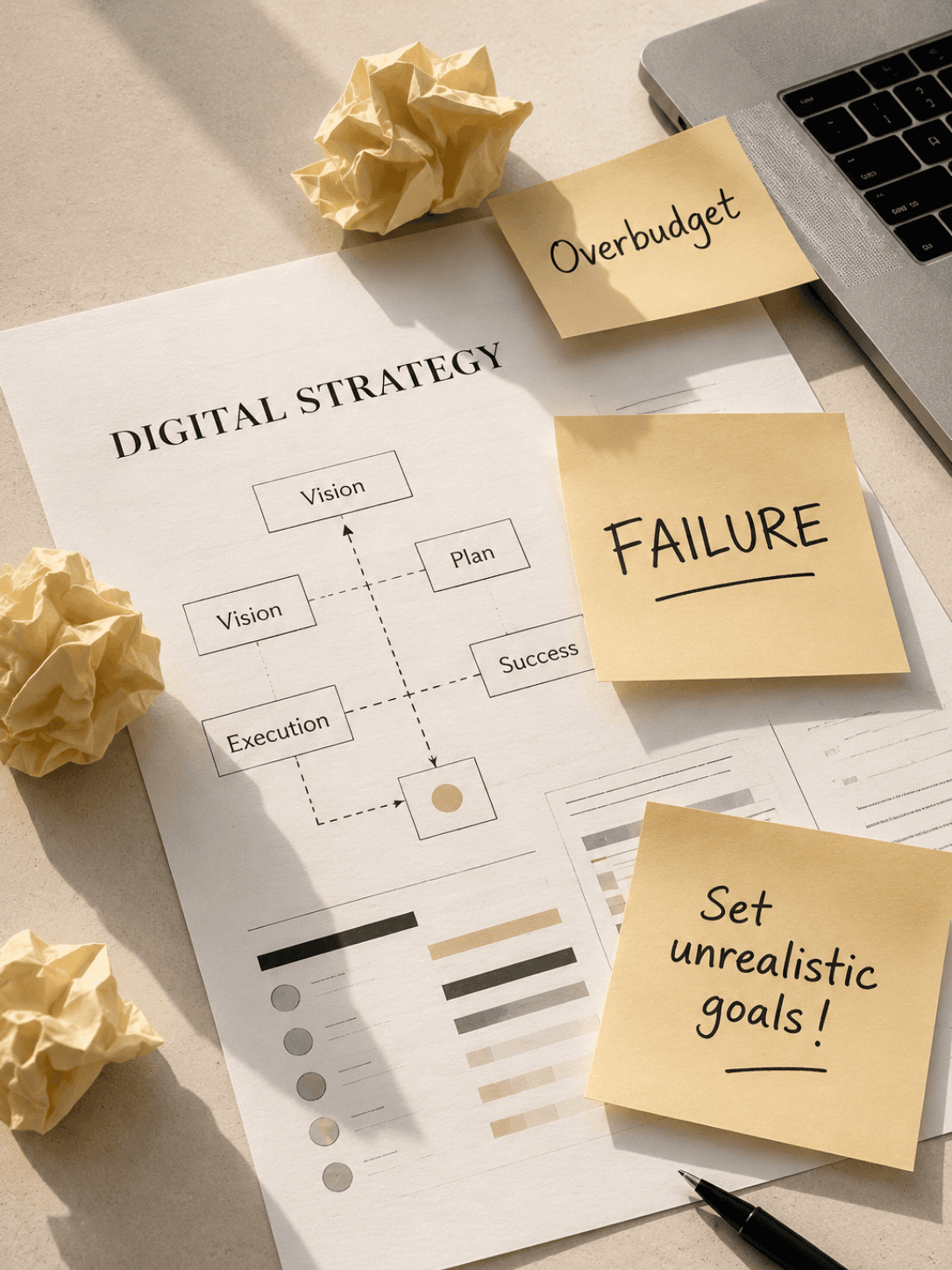
Headless goes wrong when it becomes a goal by itself. Teams choose it because it feels modern, not because they have a specific scale, experience or operational problem to solve.
Composable goes wrong when every team gets freedom without shared standards. More systems mean more integration points, more ownership questions, more testing needs and more governance work.
The hidden cost
Flexibility is not free. Someone has to own the architecture. Someone has to manage the integration landscape. Someone has to keep content models, design systems, data flows and front end experiences aligned.
Without that ownership, headless does not create speed. It creates distributed complexity.
When it does make sense
Headless and composable make sense when the business has a clear need for experience flexibility, multiple front ends, complex content operations, regional variation, advanced personalisation or a platform model that needs independent evolution.
They make less sense when the organisation mainly needs better governance, cleaner content, stronger design consistency or a simpler ecommerce operation. In those cases, architecture may not be the first problem.
The Sandstone view
We do not start with headless. We start with the growth system.
At Sandstone, architecture choices follow ambition, organisation, content needs, brand experience, marketing speed and long term maintenance. Headless can be powerful. Composable can be the right answer. But neither replaces strategy.
Flexibility without direction is just another form of complexity.
FAQ
Is headless commerce always better?
No. It depends on the organisation's needs, maturity, team capability and governance model.
What is composable commerce?
Composable commerce separates digital commerce capabilities into modular services that can be selected and connected more flexibly.
What is the biggest risk of headless?
The biggest risk is underestimating complexity, ownership, integration work and ongoing maintenance.




Newsletter
Sign up to receive occasional updates with insights on strategy,
brand, technology, marketing and AI connected as one system for growth.
Thoughtful updates, sent occasionally. Unsubscribe whenever you like.
Let’s start a conversation
Quick links
Offices

UAE

Morocco

The Netherlands
© 2026 - All rights reserved for Sandstone Project Management Services L.L.C.