A strategic growth article explaining why scalability depends on business direction, organisational readiness and technology working together.
5 mins read
The old assumption
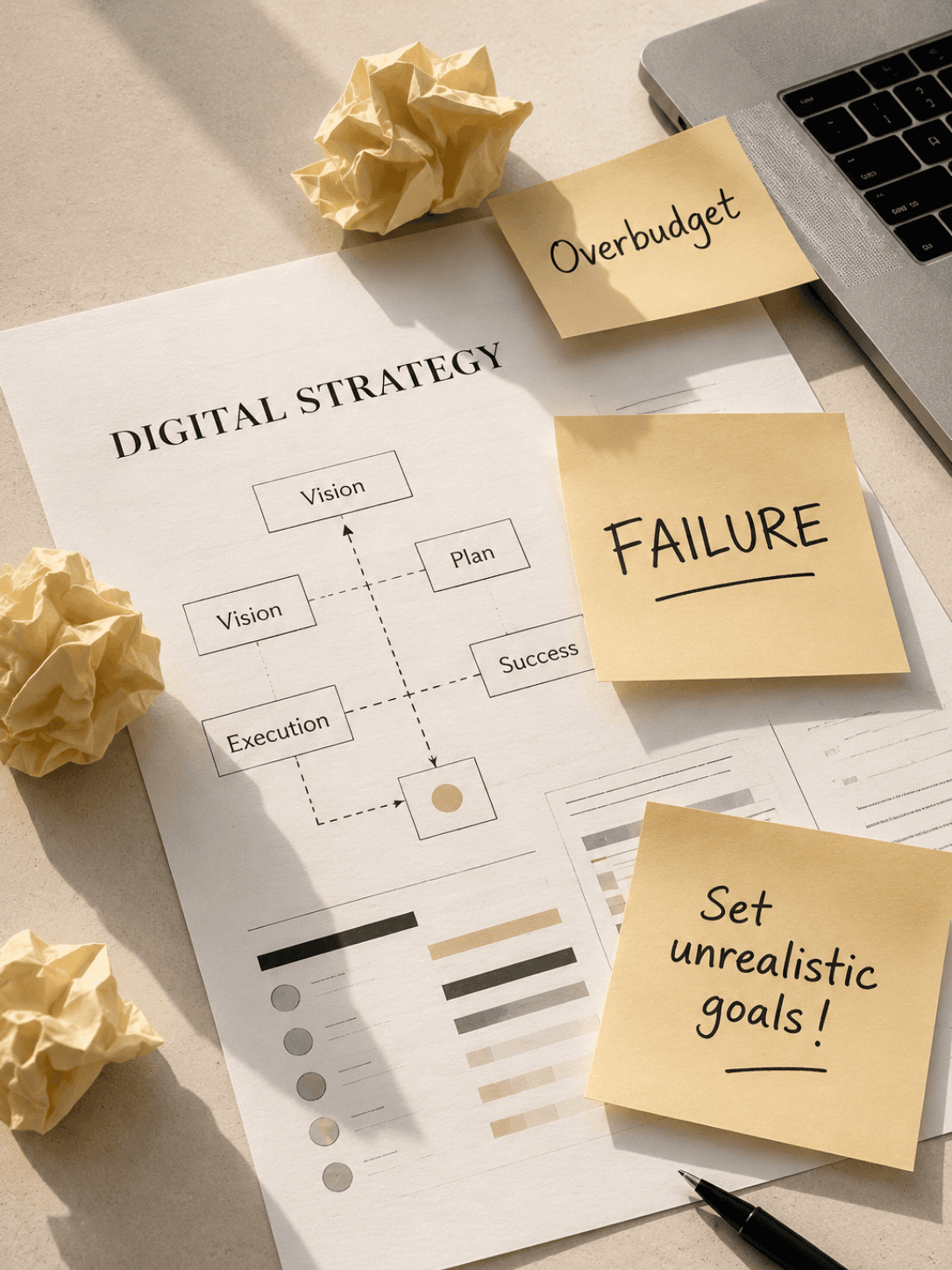
Many organisations think about scalability only when something starts to break.
Pages load slower. Releases take longer. Teams wait on each other. New markets need workarounds. Campaigns become harder to launch. At that point, scalability looks like a technical problem.
It is usually a strategic decision that was postponed.
What scalability really means
Scalability is not only about traffic, servers or performance under load. It is the ability for the organisation to grow without every next step adding disproportionate cost, delay or complexity.
That includes the brand system, content model, technology stack, marketing operation, data structure, governance and team rhythm. If one layer does not scale, the whole system starts to feel heavier.
Evidence stack
Modernising technology landscapes, reducing tech debt and connecting technology ownership to business outcomes. Gartner's technical debt guidance also points to lifecycle management and ongoing funding as conditions for sustainable improvement.
Google's performance and user experience guidance reinforces that technical quality is part of market performance. Accessibility and security sources add the same lesson from different directions: scalable systems must be reliable, usable and controlled.
Where organisations get it wrong
The first mistake is keeping growth abstract. Everyone wants more markets, more revenue and more customers. But those ambitions require different capabilities. More markets require localisation and governance. More channels require content structure. More teams require design and development standards. More personalisation requires data quality and consent management.
The second mistake is choosing technology before defining the growth model. A platform can support many scenarios, but it cannot decide which scenario matters.
The operating model
A scalable organisation makes growth explicit. What will increase: traffic, content volume, product range, teams, markets, campaigns, data use, AI workflows, customer service demand or operational complexity.
Then it designs the system around those realities. Strategy defines priorities. Brand creates recognition. Technology creates adaptability. Marketing creates momentum. AI supports speed and decision quality where it adds measurable value.
What works
Start with growth scenarios. Translate them into capability requirements. Identify which parts of the system must be standardised and which can stay flexible. Build reusable patterns. Reduce technical debt before it limits strategic options. Assign ownership to the whole system, not only the visible launch.
Scalability is a choice made early or a cost paid later.
The Sandstone view
Growth does not automatically create scale. Growth creates complexity. Structure makes that complexity manageable.
At Sandstone, we design creative systems that evolve, learn and scale. That means we do not treat scalability as a backend concern. We connect strategy, brand, technology, marketing and AI so the organisation can keep moving without losing control.
Scalability starts in strategy. Code only proves whether the strategy was clear enough.
FAQ
Is scalability only a technical topic?
No. Scalability also depends on strategy, brand systems, operating model, content structure, governance and team capacity.
When should scalability be considered?
Before major platform, brand, content or market expansion decisions are made.
What is the biggest scalability mistake?
Keeping growth abstract and assuming technology can solve unclear strategic choices later.





Newsletter
Sign up to receive occasional updates with insights on strategy,
brand, technology, marketing and AI connected as one system for growth.
Thoughtful updates, sent occasionally. Unsubscribe whenever you like.
Let’s start a conversation
Quick links
Offices

UAE

Morocco

The Netherlands
© 2026 - All rights reserved for Sandstone Project Management Services L.L.C.